Tuesday, 10 January 2017

A single phrase helped save this marriage


On paper, Richard Paul Evans seemed like he should be one of the happiest men on earth. A father of five, the wildly successful fiction writer, whose name is often atop the New York Times bestseller list, seemed to have it all. Yet despite the impressively loyal readers, the lovely kids, and the nice house in Utah, Evans was miserable, and it stemmed from unhappiness in his marriage — something he recently shared on his official website.

“My oldest daughter, Jenna, recently said to me, ‘My greatest fear as a child was that you and mom would get divorced. Then, when I was twelve, I decided that you fought so much that maybe it would be better if you did.’ Then she added with a smile. ‘I’m glad you guys figured things out.’”

It wasn’t easy. Evans and his wife, Keri, had seemed mismatched from their earliest days, and doomed to struggle almost from the start of their marriage.

“For years my wife Keri and I struggled. Looking back, I’m not exactly sure what initially drew us together, but our personalities didn’t quite match up. And the longer we were married the more extreme the differences seemed. Encountering ‘fame and fortune’ didn’t make our marriage any easier. In fact, it exacerbated our problems.”
The couple was fighting so much that Evans began to look forward to traveling book tours that would take him away from home, but the fights continued over the phone, and the couple’s moods became “perpetually defensive.” During one particularly passionate long-distance fight, Keri slammed down the phone on Evans in mid-yell. It was like an exclamation point that signaled an abrupt end.

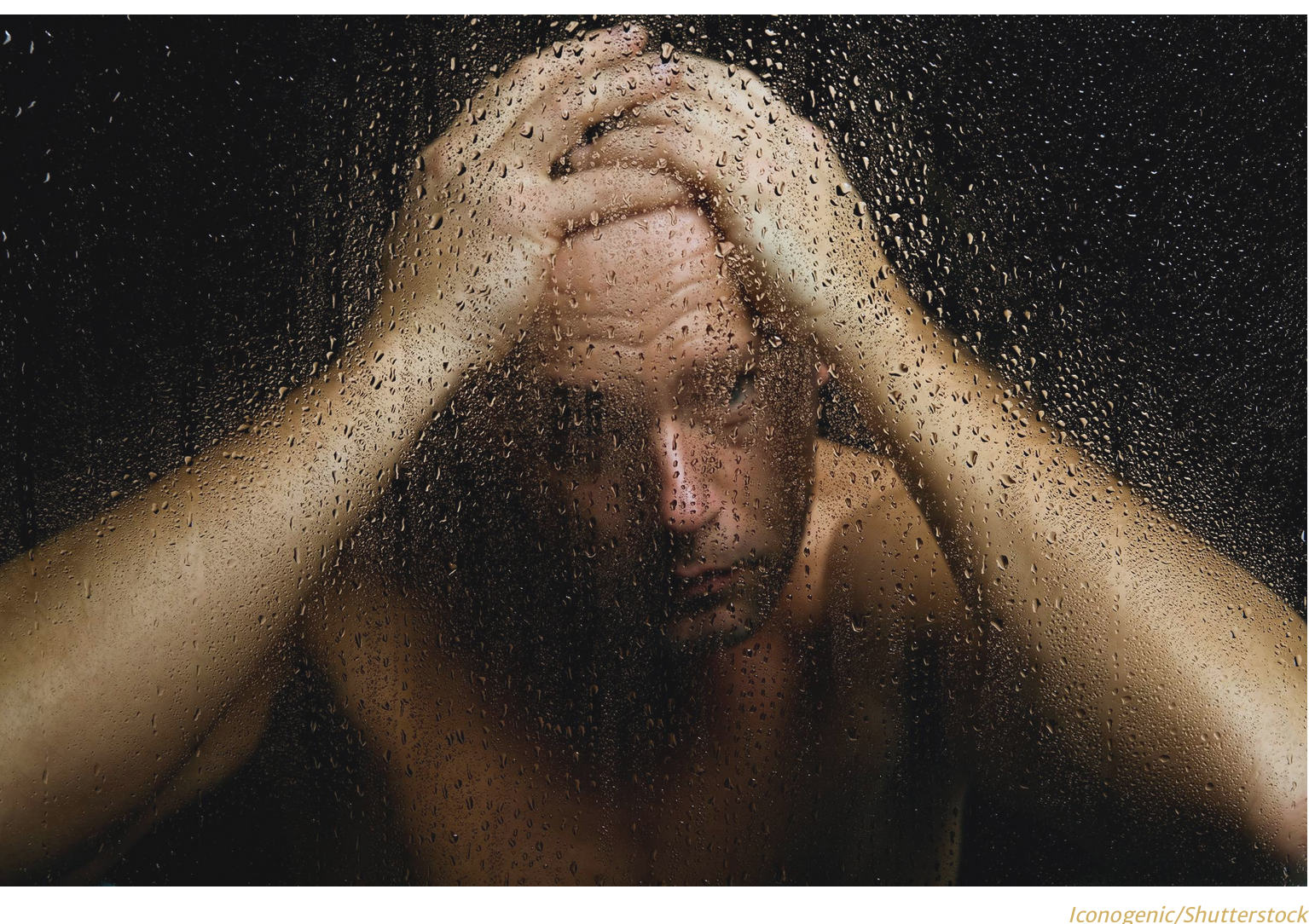
“That’s when I turned to God. Or turned on God,” writes Evans on his website. “I don’t know if you could call it prayer–maybe shouting at God isn’t prayer, maybe it is–but whatever I was engaged in I’ll never forget it. I was standing in the shower of the Buckhead Atlanta Ritz-Carlton yelling at God… Deep down I knew that Keri was a good person. And I was a good person. So why couldn’t we get along? Why had I married someone so different than me? Why wouldn’t she change?”
Finally, hoarse and broken, I sat down in the shower and began to cry. In the depths of my despair powerful inspiration came to me. You can’t change her, Rick. You can only change yourself. At that moment I began to pray. If I can’t change her, God, then change me. I prayed late into the night. I prayed the next day on the flight home. I prayed as I walked in the door to a cold wife who barely even acknowledged me. That night, as we lay in our bed, inches from each other yet miles apart, the inspiration came. I knew what I had to do.
  use I mean it,” I said. “I just want to know what I can do to make your day better.”

   She looked at me cynically. “You want to do something? Go clean the kitchen.”

   The next day, Evans greeted Keri with the same phrase, at which she narrowed her eyes, and sent him to cleaning the garage.

   It went on like that. Each morning, Evans would ask his wife, “What can I do to make your day better?” Each morning, Keri would say in exasperation, “You can’t,” often followed by “Please stop saying that.”
“I can’t,” Evans said. I made a commitment to myself. What can I do to make your day better?”

   “Why are you doing this?”
   “Because I care about you,” I said. “And our marriage.”

After two weeks of gently harassing his wife into letting him do things to make her happy, Keri broke down, sobbing. “Please stop asking me that. You’re not the problem. I am. I’m hard to live with. I don’t know why you stay with me.”
 I gently lifted her chin until she was looking in my eyes. “It’s because I love you,” I said. “What can I do to make your day better?”

   “I should be asking you that.”

   “You should,” I said. “But not now. Right now, I need to be the change. You need to know how much you mean to me.”
It was a moment of recognition and connection, full of the real intimacy that comes when apologies are made and accepted, though words, and actions, and simple presence. When Evans then asked Keri what he could do to make her day better, she said, “Can we spend time together, maybe?”

“I would love to,” he replied.
It was the needed breakthrough. Evans and Keri had moved from wanting to be away from each other, to desiring each other’s company and companionship.

Evans kept asking his ritual question for more than a month. The fights stopped, and soon Keri began asking, “What do you need from me?”
“The walls between us fell.” Evans writes. “We began having meaningful discussions on what we wanted from life and how we could make each other happier. No, we didn’t solve all our problems. I can’t even say that we never fought again. But the nature of our fights changed. Not only were they becoming more and more rare, they lacked the energy they’d once had. We’d deprived them of oxygen. We just didn’t have it in us to hurt each other anymore.”

Marriage is difficult. It is the rare couple that does not find it so, and Evans acknowledges that, but he concludes: “To have a partner in life is a remarkable gift. I’ve also learned that the institution of marriage can help heal us of our most unlovable parts. And we all have unlovable parts.”

Evans’ phrase is a good one. Often as couples become bogged down in their roles amid family, career, and church obligations, it becomes surprisingly easy to lose sight of others and their needs, even when they are lying right next to you. “What can I do to make your life better,” asked seriously and attentively is – or should be – the fundamental question of love, one that actively and intentionally clears a path away from self-interest, opening us up to others.

“Real love is not to desire a person, but to truly desire their happiness–sometimes, even, at the expense of our own happiness….I am incredibly grateful for the inspiration that came to me that day so long ago.”

Inspired is the word for it. The insight given to Evans – that real love desires the happiness of the other, even at one’s own expense – came as the answer to the prayer, and in the end it pointed precisely to Christ, as yet another means of explaining to a man, and to all of us, that love, in the end, always has a connection to the Cross.

A CONVERSION BEGINS AT THE CRIB


A man who was wandering in a town, accidentally he fixed his eyes on the tower of the Cathedral Church. He saw many people entering and going out and he decided to enter and see what is there in the building even though he was not a member of any Church. As he entered, he was shocked to see the body of a man hanging on the cross in the middle of the Church. He had seen and read about the people who are crucified during the wars who make heinous crimes. What was the mistake of this man and why is he kept in the centre of the place? He had many more questions in his heart. As the tourists were going around the Church seeing the beauty of the Church, he decided to go around. He reached in front of a crib and noticed a child in the Crib. Who is this child and why is he here? He really felt that the place was strange.
He wanted to know why the place is so strange. So he decided to ask a small girl who was standing next to the Crib, who is this child? She said He is Jesus. He asked why he is here in the manger. She replied they did not have a place in the inn and again his mother was so poor as well. What happened to this child, the man continued his question. He died on the cross. And where is he now? You know nothing of my Jesus, she continued. He rose from the dead on the third day and now he is in Heaven. Even us after our death will rise and go to heaven if we live well.
He wanted to tell her that some people had deceived her. But he could not tell her because of the conviction with which she gave the replies. Then he thought to himself, this little girl, at an younger age, has conviction in her life and still am wandering and looking for meaning and conviction. Then when he looked around and he found that those people who are silently praying in the Church have a sense of conviction and peace in their faces. If I could be silent and be like them then I too will have the conviction just like the girl. Then slowly he sat down on a bench and closed his eyes. Slowly he began to feel his heart being filled with peace and love of God. He looked at the Child in the manger and he felt that the Child in the manger is looking smiling at him.

“Brothers, If any one of you strays far away from the truth and another person brings him back to, be sure of this: he who bring the sinner from wrong way will save his soul from death and win forgiveness for many sins”
James 5: 19-20

GIVING SELF FOR OTHERS TO LIVE

Many years ago, when I worked as a volunteer at a hospital, I got to know a little girl named Liz who was suffering from a rare and serious disease. Her only chance of recovery appeared to be a blood transfusion from her 5-year-old brother, who had miraculously survived the same disease and had developed the antibodies needed to combat the illness. The doctor explained the situation to her little brother, and asked the little boy if he would be willing to give his blood to his sister. I saw him hesitate for only a moment before taking a deep breath and saying, ‘Yes, I’ll do it if it will save her.’

As the transfusion progressed, he lay in bed next to his sister and smiled, as we all did, seeing the color returning to her cheeks. Then his face grew pale and his smile faded. He looked up at the doctor and asked with a trembling voice, ‘Will I start to die right away?’.

Being young, the little boy had misunderstood the doctor; he thought he was going to have to give his sister all of his blood in order to save her.

There is no greater love than this: that a person would lay down his life for the sake of his friends.

(John 15:13)

Thursday, 5 January 2017

Pope Francis gives his "Top New Year's Resolutions


– “Take care of your spiritual life, your relationship with God, because this is the backbone of everything we do and everything we are.”

– “Take care of your family life, giving your children and loved ones not just money, but most of all your time, attention and love.”

– “Take care of your relationships with others, transforming your faith into life and your words into good works, especially on behalf of the needy.”

– “Be careful how you speak, purify your tongue of offensive words, vulgarity and worldly decadence.”

– “Heal wounds of the heart with the oil of forgiveness, forgiving those who have hurt us and medicating the wounds we have caused others.”

– “Look after your work, doing it with enthusiasm, humility, competence, passion and with a spirit that knows how to thank the Lord.”

– “Be careful of envy, lust, hatred and negative feelings that devour our interior peace and transform us into destroyed and destructive people.”

– “Watch out for anger that can lead to vengeance; for laziness that leads to existential euthanasia; for pointing the finger at others, which leads to pride; and for complaining continually, which leads to desperation.”

– “Take care of brothers and sisters who are weaker … the elderly, the sick, the hungry, the homeless and strangers, because we will be judged on this.”

Monday, 2 January 2017

BEFORE HE BECAME A PRIEST ,HE HAD GREAT LOVE


            Before he was a priest, he had a great love
He became a priest thanks to her -- and their story is beautiful

Once, I fell in love.


It was a long time ago, before I became a priest, before I went to the seminary. Her name was Valentina. She had long black hair, down to her shoulders, that she always wore tied back or adorned with something. Her big green eyes were the window to her soul; they revealed the most beautiful secrets. If she was beautiful on the outside, she was more so on the inside. Perhaps that’s why I fell in love.

I still remember the first time I saw her. I was an altar boy at the parish of St. Joseph. It was a small church and we all knew each other. So it was to be expected that someone new would draw attention. And there was Valentina, with her father and her sister. Mr. Bernini had just moved to town with his two daughters, having been left a widower.

Even today, I can’t describe the sensation that Valentina’s sweet, irresistible smile caused in me. I can only say that it was enough to distract me during Mass, obviously costing me a good confession. I was 15.

Even though I was a little gangly, I was a good kid. I think she saw that and that’s why she fell in love with me. Valentina’s beauty was a reflection of divine beauty, making me feel that when I was beside her I was in Heaven. If you’ve found someone that allows you to live Heaven on earth, don’t take it for granted.

Valentina was the great love of my life. Allow me to explain. I was sure that I had beside me the most beautiful girl in the world. She lived smiling. And I had won her smile. I felt that above all, we were becoming friends. Mass each morning, the rosary at the end of the afternoon, kisses on the cheek, the blessing of Father George and even of Mr. Bernini. Everything was working in our favor. I was certain of one thing: I was the happiest 15-year-old in the world.

And yet, I felt incomplete and I didn’t understand how that could be possible. If Valentina wasn’t enough to “fulfill” me, what could possibly be enough? God. The powerful and irresistible call of God resonated in me and I understood everything: He was the ideal to whom I’d give my life completely, the only reality capable of calming my thirst.

I will be eternally grateful to Valentina. God worked through her to show me that not even the greatest earthly beauty could compare to His. With sorrow and tears, we parted ways. I went to minor seminary.

I confess that for some time, I thought about how my future could have been beside her: how many children we would have had, what we would have named them, what our house would have been like, if she would still have smiled at my bad jokes or if at some moment, I would have done something to make her cry.

But these thoughts would vanish quickly when I’d think of how I am happy as a priest. I’ve been a priest for 19 years now.

She also was happy. She got married and had four children — among them a Carmelite and a seminarian — she was a fantastic mother and had a devoted and noble husband.

It’s 7:42. I’m getting ready to leave the rectory. I was awakened at 6:30 by a phone call giving me bad news. Valentina had died. Valentina the fighter, who battled breast cancer, had chosen to rest.

I sat down to write, fearing that in leaving, she would take with her all of my memories of our holy friendship. I am a priest thanks to Valentina, and I am sure that my priestly ministry will be strengthened with her intercession from heaven.

Tuesday, 13 December 2016

THE END OF DESPAIR- PRAYER SAVED MY LIFE


I was drving home from church after my fourth Mass of the day, and the dark night hung like a nightmare, closing in and pressing down. My thoughts, churning like rapids, ventured deeper and deeper into the pit of despair.

My marriage had just ended. For several weeks I put up a strong front, not betraying the growing depression that was overcoming me. Eventually, it hit with the ferocity of a tsunami, making me spin and spin until finally I saw no way out, nowhere to go except the end.

Backing Up
When I got married, I doubt anyone imagined I would give up on the Catholic Church. After all, before I met the one, the girl I knew I would marry, I had been discerning a vocation with the Jesuits for nearly five years.

But I left. I left for some some not-so-good reasons but primarily because I had no spiritual life to speak of. I found it much more difficult to have a healthy prayer life while married, especially after our kids were born. Occasionally, I said a rosary or recited some other prayers, but the distractions were too great. Without the help of a good, consistent spiritual guide, I was in over my head, not prepared for marriage or the spiritual responsibilities it entailed.


But I came back. I came back to the church a week before my wife left me. I shudder to think of how things might be different now if I had not. I was even luckier to have found a wonderful priest who, though busy, took time to guide me back to a life closer to God. During this time, he gave me a piece of advice I would need to get through my darkest hours: “You do too much; you need to pray more.” This priest and what he taught me were my salvation. Without the weeks I spent easing back into prayer, I would not be alive today.

On the Edge
It was a Sunday in November and the case of a young woman who had chosen to take her life by physician-assisted suicide had been all over the news for the past week. I attempted to conquer the questions gathering like storm clouds in my mind. Could I too choose to make the pain stop by staying busy? I volunteered to help out with as many of the Mass duties and as many Masses as I could—pushing the inevitable away and lying to myself that everything was O.K.

Eventually, the action was over and everyone had to go home. There is always a point when the doing ends, and then we are faced with the deafening and horrendous silence that is our thoughts. The light was extinguished; the darkness had conquered. Every thought that raced through my mind was worse than the last. The drive home quickly became a torture. The only solace came when I devised the method that would be the most efficient but the least painful. I had heard about this point on the road: the flood, if you will, that sends one over the top. The relatively long drive from the church to my apartment became a curse.

But somewhere along the road, God broke through the thick, viscous shroud that hung as a barrier to my inner being. Finally, that shield was penetrated ever so slightly, just enough for a small piece of self-realization and reason to break through. Suddenly, the impending danger to my life was hanging on the air as clear as a wild animal standing nearby; only I was the wild animal.

Please support our journalism. Subscribe now!
I drove straight past my apartment complex and checked myself into the hospital about half a mile down the road. That decision saved my life.

When I refused to go to the V.A. hospital, the doctor sent for a government representative, a psychiatrist, to evaluate me. The representative put me very much at ease, and instead of chastising me for “wasting resources,” as I expected, he simply said: “You’re very strong! To have realized the danger you were in and then come here for help—that’s not common.” I thank God for that moment of uncommon strength in the midst of despair.

Walking With God
It has been a year and a half now since that fateful day, and I wish I could say that I am cured, but that is not true. In reality, this kind of thing almost never fully goes away. One must admit that. One must understand that, or it will eat you alive. The question now is not, “Am I cured?” but rather “How do I live?” Every day is a struggle that I must meet head on—but not alone; that is where I went wrong and sometimes still do. The struggle is too much for us as individuals. While having the support of another person is always a bonus, it is just that, a bonus. The key is having a relationship with the strongest, wisest and most loving being in our existence: God.

I know: It sounds like a cliché. But we often rely on our personal relationships with family and friends, especially when life hits hard. Why, then, is it so embarrassing to do the same with the Lord? I needed to leave my ego behind and stop worrying what others thought of me. I began my journey the way one normally undertakes a new challenge: by finding teachers.

From the Benedictines I learned inner contemplation, to slow down, to meditate. At their monastery in Clear Creek, Okla., I was immersed in the beauty of the Liturgy of the Hours, which the monks prayed in the most arresting Gregorian chant.

With the guidance of Jesuits I was able to return to my Ignatian roots. They have a house just down the road from me, and the superior allowed me to go on retreats there, even though I could not pay all the costs. Through the assistance of these wonderful Jesuits and Ignatian spirituality, I learned to find the shadows, the damage, the problems in my soul before they are able to build into a new crescendo.

Finally, I have gained much from my lay brothers and sisters. I joined a lay chapter of the Order of Preachers soon after leaving the hospital and with them learned the joys of Dominican balance. I learned that what I need is not too much prayer, not too much work, not too much community or alone time but to balance all of them together.

In a recent Sunday homily, the priest, the one who brought me back to prayer when I needed it most, made a wonderful comment about achieving such balance: “When the Benedictines open their ‘schedule,’ they put down when they pray and meditate, then they fit in the work that needs to be done. When we open our schedules, we shove work in until there is barely any room left, and then we try to squeeze prayer in.”

Not that long ago, I was not even trying to squeeze prayer in. Today, my prayers are constant and consistent. I am not free of my depression. Each day I wake and must force myself to think good thoughts and force the bad ones away, and it does not always work. But I am at peace. And that, I pray, is where I will remain.

Joe Watson Jr., a native Texan and Army veteran, is a lay Dominican and a member of the Knights of Columbus. He has studied biochemistry and mathematics.

Tuesday, 6 December 2016

My Son, the Pseudonym Was it porn? Was it drugs? What were we losing our son to, in his solitary word?


As our 16-year-old son slipped away after dinner to sit in his dark bedroom with only the light of his laptop for company, my husband shook his head and asked, “Porn?”

When his grades dropped and he started missing homework assignments and blowing off his friends, I looked at my husband and said, “Maybe drugs?”

We ransacked his room and dug through his computer history, and found nothing other than a half-eaten sandwich under his bed that we think used to be turkey, and that he watched a lot of Weird Al on YouTube.

We asked him what was going on. He shrugged, looked at the floor, and mumbled, “Nothing …”

A few weeks after that he began slipping out the front door and heading for the creek at the end of our street. We finally followed him to see what was up, and saw him crouched down in the brush slinking from tree to tree. His father shook his head, motioned for us to leave and whispered, “Your son is out of his freaking mind.”

We stopped seeing his friends hanging around our house. His teachers were constantly e-mailing us about forgotten homework. He was failing algebra and very nearly flunking chemistry. He was walking a path straight toward juvenile delinquency and having to repeat the tenth grade. We were swimming in a sea of red flags with no solution to the mystery of what-had-happened-to-our-son anywhere in sight.

Last night, I hit the end of my rope. I stood in the kitchen holding notice of a failed test in my hand and really gave him what for. I let my frustration burst forth, and it rained down heavy on his head. He stood in front of me with his head bowed, chewing his lip and nervously shifting his weight.

“You haven’t been turning in anything!” I hollered. “What on earth could you possibly be doing that’s more important than passing the tenth grade?!?”

Without looking up at me, he whispered, “I wrote a book.”

I stared at him dumbfounded. “What?”

“I wrote a book. Last fall.”

I just stared at him, the anger gone out of me, replaced by complete confusion. “A book? How long of a book?”

“Around 60,000 words.”

“What kind of book? Has anyone seen it? Why is this the first I’m hearing about it?” The questions just poured from me.

“Ummm … it’s like a medieval fantasy fiction kind of thing.”

“Have you shown it to anyone? Can I read it?”

“I self-published it, Mom. Like in e-book format? It’s been downloaded almost 1,000 times. The readers seem to like it. And they like the sequel too.”

“There’s a book and a sequel? When do you write this?”

“At night. I turn off the lights so there’s no distractions, and I just write. I told my friends that they have to be patient. I’ll be back in a few months.”

I just kept staring at the man-child in front of me as the pieces of the puzzle slid neatly into place. He wasn’t on drugs or suicidal. He wasn’t just blowing off school; he was succumbing to the soul-aching need to put words on paper. It’s an addiction, a driving need. It’s one that I know intimately and can’t believe I didn’t recognize.

He’s not an antisocial delinquent, he’s his mother’s child. He’s a writer, God help him.

I wrapped my arms around him and said, “Three things: The book thing is cool, but you still have to pass algebra.”

He sighed “okay” into my neck. “What else?”

“I get to read it. Dad and I pay for the Internet, we get to know what you’re using it for.”

“And the third thing?”

“What were you doing at the creek in the brush?”

“Choreographing battle scenes.”

“Of course you were.”

I’ve signed him up for a writer’s workshop over the summer and told him that he can take a gap year after high school to work on his writing, as college isn’t necessarily for everyone; and as of this moment I’m halfway through his first book. It’s funny. And good. And really funny. At only 16 years old, he’s already a better writer than I’ll ever hope to be.

He still has to pass algebra.

We’ve hired a tutor.

Culled from ALETEIA